Showing posts with label PD. Show all posts

Monday, 25 March 2019

How do you RATE your teaching practice?

Today's staff PD session led by Dorothy Burt was a timely reminder that effective teachers are THE key component in achieving success in the classroom.  The world of digital learning offers many bells and whistles but nothing can replace what a competent teacher body can bring to the classroom.

Dorothy introduced us to the RATE framework. I found it very useful to breakdown how I can access EFFECTIVE TEACHING PRACTISE and continue my own personal journey to develop my teaching skillset.


R = RECOGNISE Effective Practice by seeking out out teaching practices that work. We got to see this in action at the end of our PD session with staff split into groups, role playing a guided reading session with a focus on a specific element of the NZ Curriculum (Reading, Level 2) with a 'teacher'  supporting 'students' to overcome decoding challenges. Lots of great ideas on display!

A = AMPLIFY Effective Practise by using the Learn-Create-Share pedagogy. Staying connected to other educators through our networks, keeping good practice visible, feeling empowered to get out and put different ideas into practise and taking advantage of colleagues skills and experiences at at time and place that suits (ubiquitous) e.g. online toolkits

T = TURBOCHARGE Effective Practise by using digital technologies to provide learning experiences that were previously not possible (SAMR model) or were not available 

E = EFFECTIVE PRACTICE 


Thursday, 19 October 2017

Fractions and Decimals with Jo Knox


20171019_103654.jpg


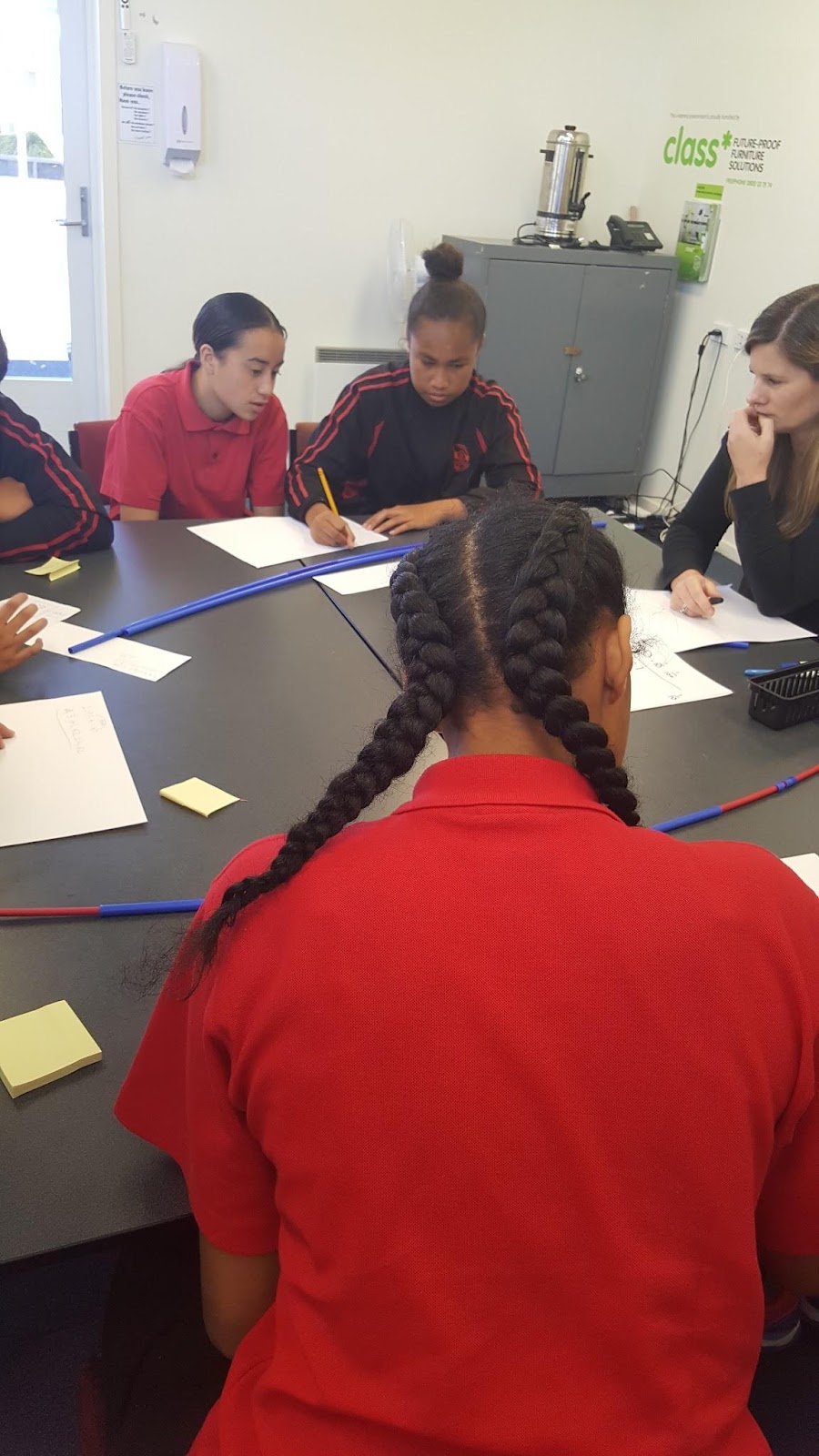
Today Team 5 had the opportunity to watch Jo Knox in action with two different Maths groups (one at Stage 6 and one at Stage 7). The aim was to see her teach students to convert fractions into decimals.

DIAGNOSTIC TESTING Jo asked a series of quick questions to gauge the groups understanding of fractions and decimals based on examples from the Numeracy  Development Project (NPD) resources or ‘Pink books’.


MATERIALS - Decipipes are a really effective tool to help support students to understand the basics of fractions and decimals. They are also easy for students to manipulate, able to break/build up both representations of both fraction and decimal numbers. 

STRATEGY MODEL Start students off using materials then progressing to Imaging and then Materials as students show greater fluency in their use of a given strategy - see NPD Book 3 p5 
e

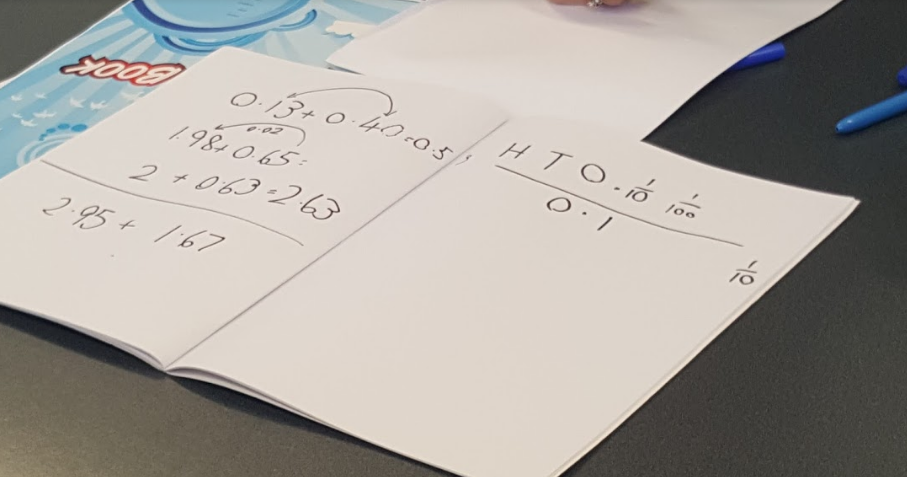
MODELLING BOOK
 - Number equations were recorded 
in a modelling book in plain view of all students. A handy reference point for the teacher to guide students in their thinking and to record in themselves (see next note).
STUDENT THINKING - Jo regularly asked students to explain their answers. The focus was on how they got an answer, helped to highlight can be more than one ‘correct’ solution; extended this to give specific roles to members of the group - split group into three - one group explained their answer, while a second group modelled the answer using materials (decipipes) and a third group recorded answer in modelling book - this approach ensure all students were fully engaged!

PLENARY - at the end of each group’s session, Jo asked the students to reflect on what they had learned and together they co-constructed the WALT for the lesson in kid’s language - she feels that sharing the WALT at start of lesson isl ike giving away the punchline of a joke upfront


Example 1: WALT Convert fractions and decimals by turning them into tenths, hundredths and thousandths

Example 2: WALT by add numbers by taking one off one number and adding to another to make a whole number


So many golden nuggets from this session! I would like to try out co-constructing WALTs with my students - it will be interesting to see if what I had planned to teach matches up with what students feel they have learnt.